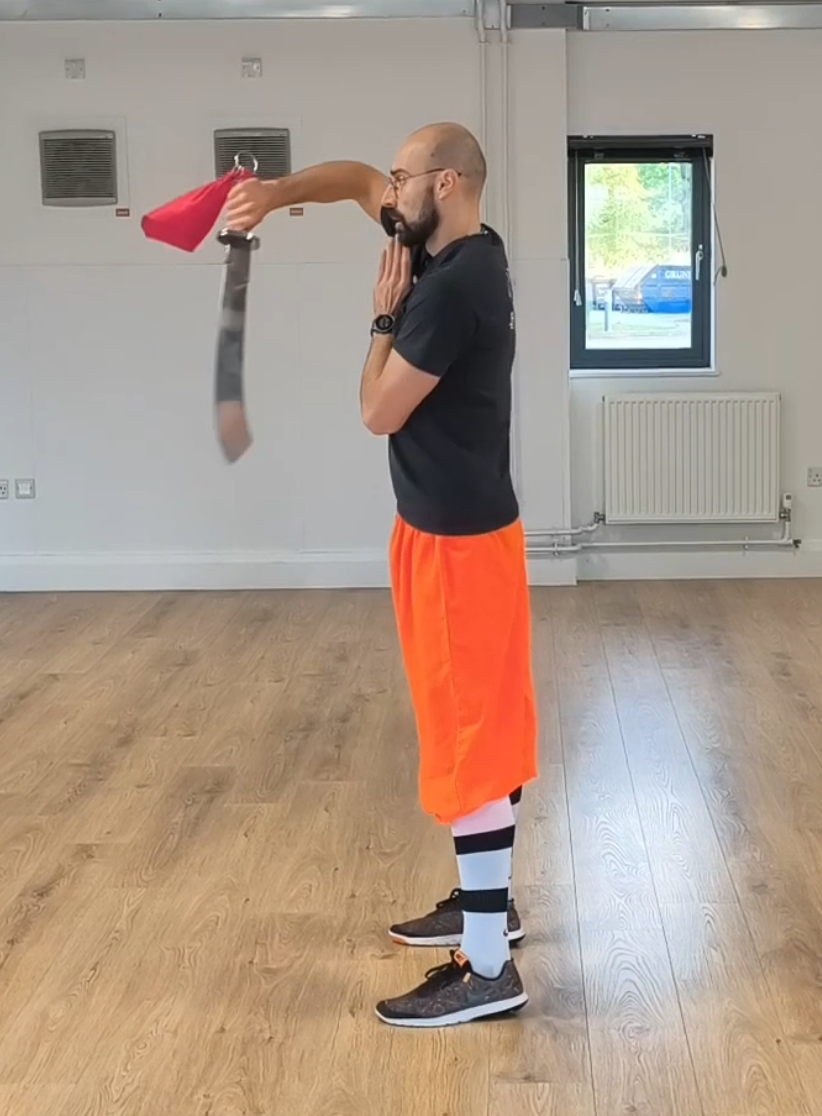
Someone else could see the change
During an exercise, my partner watched me describe the same subject in two states. Without passion, my eyes dropped, my voice softened and my body withdrew. When I spoke with conviction, the spark returned to my eyes, the voice gained strength and the whole posture became more available.
“Your posture is always sending the mind a message.”
The lesson was not to fake happiness
Physiology cannot solve every grief, and difficult emotions deserve to be heard. But the experiment showed that I was not always a passive spectator of state. Breath, gaze, gesture and stance could change the conditions in which an emotion unfolded.
Kung Fu already knew
A martial stance is psychological as well as mechanical. Rooted feet, an open chest and a clear gaze organise attention. Qigong adds softness so power does not become bracing. When I change the body with awareness, emotion often follows motion—not as a command, but as an invitation.
Change the physical message
Emotion is not only a story in the mind. It is also expressed through breathing rhythm, muscular tension, gaze, gesture and voice. Altering physiology cannot erase grief or solve every problem, but it can widen the range of responses available inside a difficult state. I use the body as an entrance, not as a denial.
Try this: describe the same neutral subject twice for thirty seconds. First use the posture and voice of low energy; then stand rooted, widen your gaze, let the arms move and speak with conviction. Compare breath, attention and emotion afterward. Keep only the changes that feel energising without strain.
For sixty seconds, stand as you do when calm and capable. Soften the jaw, widen the gaze and breathe comfortably. Notice what changes without forcing a mood.
This original letter is one of Yacopo's personal reflections from the courses and practices he continues to study as part of becoming better and better. Each lesson is tested through his lived experience in science, Kung Fu, relationships and the Spartan Monk Method.
The conversation