Fifteen years, one stance
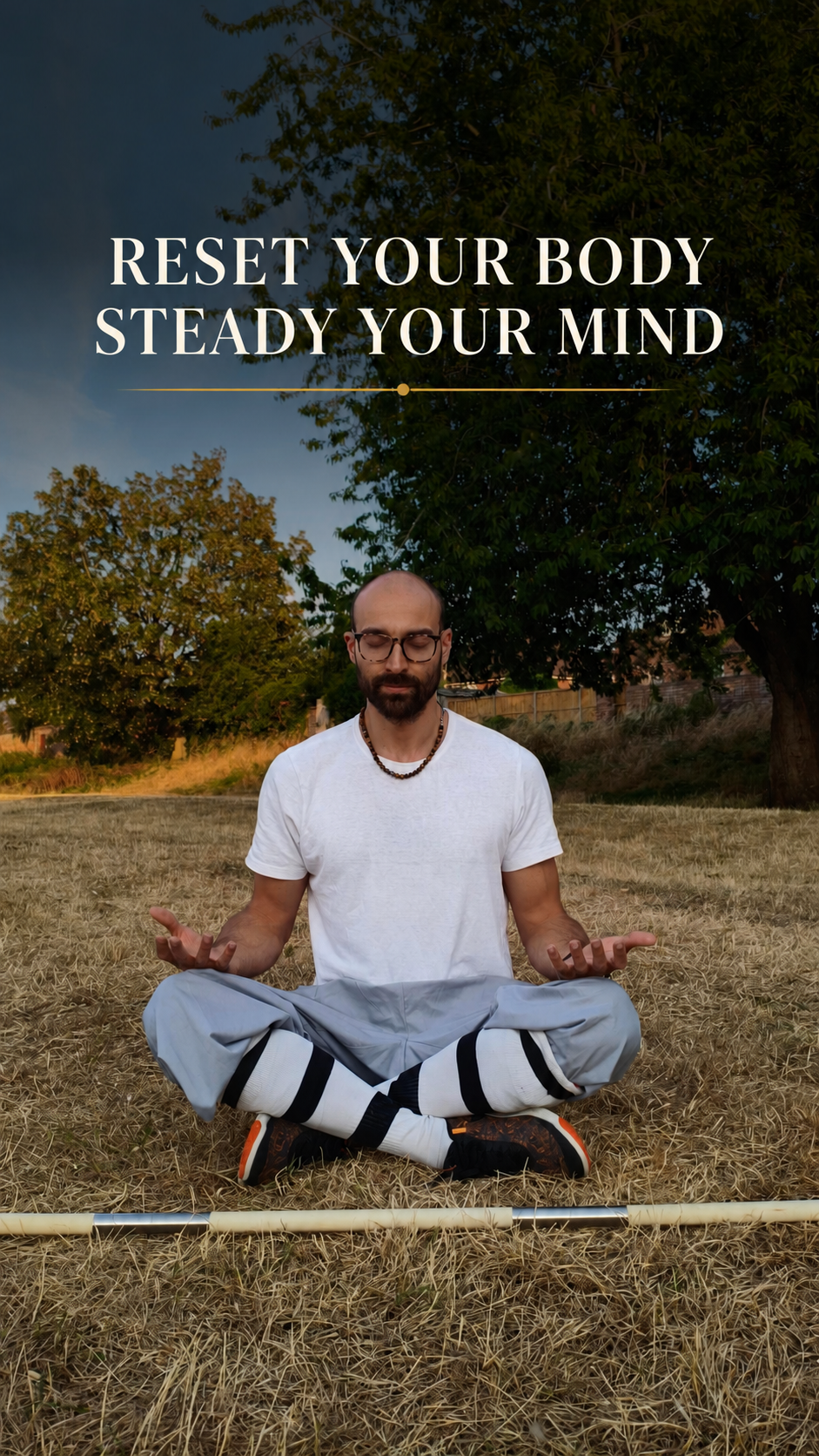
I have trained in martial arts for more than fifteen years, including seven years with a Shaolin Kung Fu master. Time has not made the basics smaller. It has made them deeper. A stance can still reveal impatience; a step can still expose where my attention leaves my body.
Beginners often imagine that advanced training means collecting complexity. I understand the attraction. Complicated movement looks like progress. But under fatigue or pressure, decoration falls away and the body returns to what it truly knows.
“The basic becomes advanced when attention stops asking to be entertained.”
Repetition with a question
Mindless repetition makes the familiar dull. Attentive repetition turns it into a laboratory. Where is the weight? What begins the movement? Can the shoulders remain free while the legs work? Is the breath supporting the rhythm or chasing it?
The question changes the repetition. A basic action performed with a more exact perception is no longer the same action. This is why mastery can look simple from outside and feel inexhaustible from within.
The humility of foundations
Foundations are not a punishment we outgrow. They are the architecture that lets freedom become safe. In Kung Fu, structure permits speed. In life, routines permit creativity. In science, careful definitions permit discovery.
When I return to basics, I am not going backwards. I am checking whether the person I am becoming still has somewhere honest to stand.
What my teachers gave me
Seven years of studying with a Shaolin Kung Fu master taught me that correction is a form of respect. Returning to a stance or guard was never an insult to progress. It was an invitation to remove what had become careless.
When I later taught children in Italy and adults through the UKAEA Kung Fu club, the basics became even more important. A teacher must see the movement from many bodies, not only from the comfort of his own habits.
Every student made the principle clearer: structure must serve the person. The shape can be adapted while the lesson remains—root before expression, alignment before force, and attention before repetition.
Choose one movement you know well. Practise it for five minutes while changing only one variable: weight, breath, gaze or tempo.
The conversation